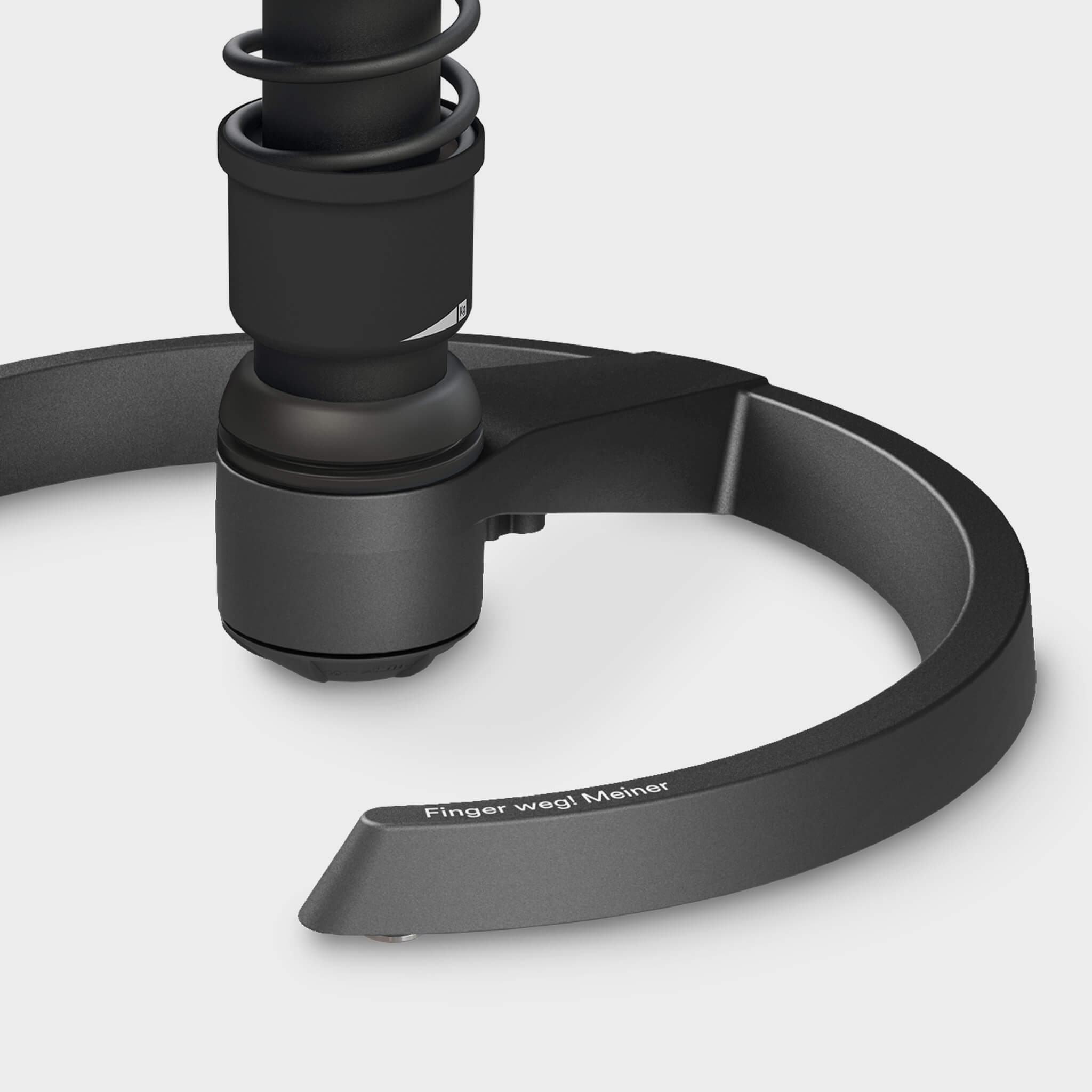
In einer Zeit, in der Bewegungsmangel und Stress zu großen Herausforderungen im Arbeitsalltag werden, stellt sich die Frage: Wie lassen sich Arbeitsräume gestalten, die sowohl ästhetisch überzeugen als auch die Mitarbeitergesundheit fördern? Unsere neueste Entwicklung liefert die Antwort: der Aeris Linu.
Mit seinem eleganten Design und seiner außergewöhnlichen Flexibilität definiert er den modernen Bürostuhl neu und wird zum Herzstück gesundheitsbewusster Arbeitswelten. Damit bietet er Nutzern wie auch Architekten und Planern eine gelungene Symbiose aus Form und Funktion, die sich in nahtlos in jedes Bürokonzept einfügt.
Vielseitigkeit in Design und Funktion – der Aeris Linu bewegt
Der Schlüssel zur Bewegungsfreiheit des Aeris Linu liegt in der weiterentwickelten Kinematik, inspiriert vom Aeris Numo Task. „Die Herausforderung bestand darin, die Kinematik so zu gestalten, dass Bewegungen in alle Richtungen fließend und ohne spürbare Gelenke möglich sind“, erklärt Dietlind Walger, Chief Product Development Officer bei Aeris.
Darüber hinaus wurde der Aeris Linu so konstruiert, dass er noch mehr seitliche Flexibilität ermöglicht und sich so den natürlichen Bewegungen des Nutzers anpasst. Zusätzlich unterstützt ein Federbein sanfte Schwingbewegungen, die auch nach langen Arbeitsstunden für spürbares Wohlbefinden sorgen. „Jeder Stuhl von Aeris hat die Aufgabe, den Nutzer in Bewegung zu halten, und der Aeris Linu ist da keine Ausnahme“, fügt Walger hinzu.
Die ergonomischen Merkmale wie die großzügige Sitzfläche und die hohe Rückenlehne sind gezielt auf höchsten Komfort ausgelegt. „Die hochwertige Polsterung rundet das Design ab und sorgt dafür, dass Wohlbefinden und Eleganz perfekt miteinander harmonieren.“

Prototyp des Aeris Linu Bürostuhls mit Rollen.
Die Köpfe hinter dem Aeris Linu: Kreativität trifft Technik
Der Aeris Linu ist das Ergebnis der engen Zusammenarbeit zwischen unserem internen Entwicklungsteam und dem Designer Andreas Ostwald. Gemeinsam mit Dietlind Walger (Chief Product Development Officer), Torsten Teschner (Mechanical Designer & Project Engineer) und Aleksandar Dobric (Technical Product Researcher & Developer) entstand ein Produkt, das höchste Flexibilität und elegantes Design miteinander verbindet.
„Es ist das Zusammenspiel von Kreativität und Technik, das Aeris Linu zu einem einzigartigen Stuhl macht“, erklärt Dietlind Walger. „Jeder im Team hat seinen Teil dazu beigetragen, dass aus einer Idee ein Stuhl wurde, der Bewegung neu definiert.“

Designteam des Aeris Linu (von links nach rechts): Torsten Teschner, Dietlind Walger und Andreas Ostwald
Ein schneller und kreativer Entwicklungsprozess
Der Design- und Entwicklungsprozess des neuen Aeris Linus war einer der schnellsten aller bisherigen Aeris-Stühle.
Die erste Idee für das neue Kinematik-Konzept entstand bereits Mitte 2023 nach der Produktentwicklung des Aeris Numo Task. Mit einem ersten Designentwurf von Andreas Ostwald für die Sitzschale, das Polster und die Kinematik im Januar 2024, konnte das Projekt innerhalb von nur sechs Monaten erfolgreich umgesetzt werden.
Ermöglicht wurde dieses Tempo vor allem durch die enge Zusammenarbeit mit einem externen Herstellungspartner, der bereits zu Beginn der Aeris-Geschichte als Fertigungspartner am Aeris Swopper beteiligt war und schon damals wesentliche Teile produzierte.
 Stoffmuster und technische Zeichnungen zeigen die Entwicklungsschritte eines ergonomischen Stuhldesigns.
Ein Interview mit Dietlind Walger: Inspiration und Design
Aeris: Wie kam es zur Idee für den Aeris Linu?
Dietlind Walger: Nachdem wir für die Kinematik des Numo Task so viel positives Nutzer-Feedback erhalten haben, lag es nahe, eine Weiterentwicklung anzustreben. Unser Ziel war es, noch mehr seitliche Flexibilität zu erreichen.
Und so kam eins zum anderen: Aus unserem Produktentwicklungsteam kamen gute Ideen zur Anpassung der Geometrie für mehr seitliche Flexibilität. Als Andreas Ostwald dann das passende Design zur neuen Kinematik und die darauf abgestimmte Schale lieferte, fügte sich alles perfekt zusammen.
Aeris: Welches Designziel wurde beim Aeris Linu verfolgt?
Dietlind Walger: Die Schale sollte schlicht und elegant wirken, unabhängig davon, ob sie gepolstert ist oder nicht. Gleichzeitig sollte sie flexibel genug sein, um auf verschiedene Untergestelle gesetzt zu werden. Die Polsterung und die klassische Steppung unterstützen das schlanke Design der Schale, und die größere Sitzfläche sowie die höhere Rückenlehne sorgen für zusätzlichen Komfort.
Sehr viel besser kann das alles natürlich Andreas Ostwald, der Designer von Aeris Linu beantworten…
"Die initiale Frage dieses Projektes bestand in der Aufgabe eine höhere Lehne zu realisieren - denn auch ein hoher schöner Rücken kann entzücken! Also ging es in die Ästethik: Eine elegante Linie, ein Leichter Schwung, etwas Graziles - das dann über die Mittelebene gespiegelt - die Form begrenzt, eine spherische Wölbung und die richtige Haltung beim Sitzen ist ein Leichtes." - Andreas Ostwald
Aeris: Welche Herausforderungen traten im Entwicklungsprozess auf?
Dietlind Walger: Wie bei all unseren Stuhlentwicklungen müssen wir immer versuchen, größtmögliche Bewegung bei gleichzeitiger Einhaltung aller relevanten Sicherheitsnormen zu garantieren. Vor allem das Thema Standsicherheit und Klemmgefahr stellte uns immer wieder vor knifflige Herausforderungen.

Aeris: Welche Rolle spielte Nachhaltigkeit bei der Entwicklung des Aeris Linus?
Dietlind Walger: Nachhaltigkeit ist ein zentraler Bestandteil unserer Unternehmensphilosophie. Beim Aeris Linu haben wir verstärkt auf „Circular Economy“ gesetzt. Das bedeutet, dass alle verwendeten Materialien leicht getrennt und wiederverwertet werden können. Darüber hinaus bieten wir für unsere Produkte einen Reparatur- und Refurbishment-Service im Werk an.
Für den Stuhl haben wir uns dann ganz bewusst für einen regionalen Hersteller entschieden, der bereits „Circular Economy“ anbietet und große Erfahrung im Verarbeiten von Recycling-Kunststoffen und Post-Consumer-Material hat. Auch im Entwicklungsprozess von Linu konnte uns dieser Partner mit seinem sehr gut aufgestellten Engineering Department unterstützen.
Und auch bei der Polsterung konnten wir den Fokus auf Nachhaltigkeit legen. Für den Circular Economy-Prozess kann das Polster sehr gut in seine Material-Bestandteile zerlegt werden. Für den Bezug verwenden wir außerdem wieder unseren nachhaltigen Bezugsstoff Cura, der zu 100 Prozent aus Post-Consumer-Polyester gefertigt wird.
 Die Stoffmuster sowie die Polsterung werden anhand von Mustern und technischen Skizzen geprüft.
Aeris: Was war der größte Erfolgsmoment im Entwicklungsprozess?
Dietlind Walger: Als wir das erste Mal auf einem der gedruckten Prototypen sitzen konnten und diese tolle Bewegung des Stuhles fühlen konnten – das war ein Glücksmoment. Und dann haben wir uns auch an dem glücklichen Lächeln aller anderen Tester erfreuen können. Da wussten wir: Das wird ein tolles Produkt!
Aeris: Wie hat sich die Entwicklung der Aeris-Stühle über die Jahre verändert?
Dietlind Walger: In den letzten Jahren haben wir vermehrt auf externe Firmen zurückgegriffen, die uns in kurzer Zeit Modelle unserer ersten Ideen bauen. So können wir schneller sehen, ob unser Design funktioniert.
Mittlerweile haben wir auch 3D-Drucker im Haus: Hier wollen wir auch noch weiter ausbauen, da es den Entwicklungsprozess enorm beschleunigt.
Und wenn wir dann – wie bei Linu - mit Herstellern zusammenarbeiten, die auch im Engineering unterstützen können, geht es noch mal schneller.

Einzelteile und eine Modellversion des Aeris Linu aus unserem internen 3D-Drucker.
Auf der Orgatec 2024 können Fachbesucher den Aeris Linu erstmal live erleben und sich von seinem einzigartigen Design und seiner Flexibilität bewegen lassen. Ab Mitte 2025 ist die neue Büro- und Konferenzstuhl-Serie in unserem Shop und im autorisierten Fachhandel erhältlich. Wer nicht warten möchte, kann schon jetzt unser Vertriebsteam kontaktieren, um den Aeris Linu vorzubestellen.